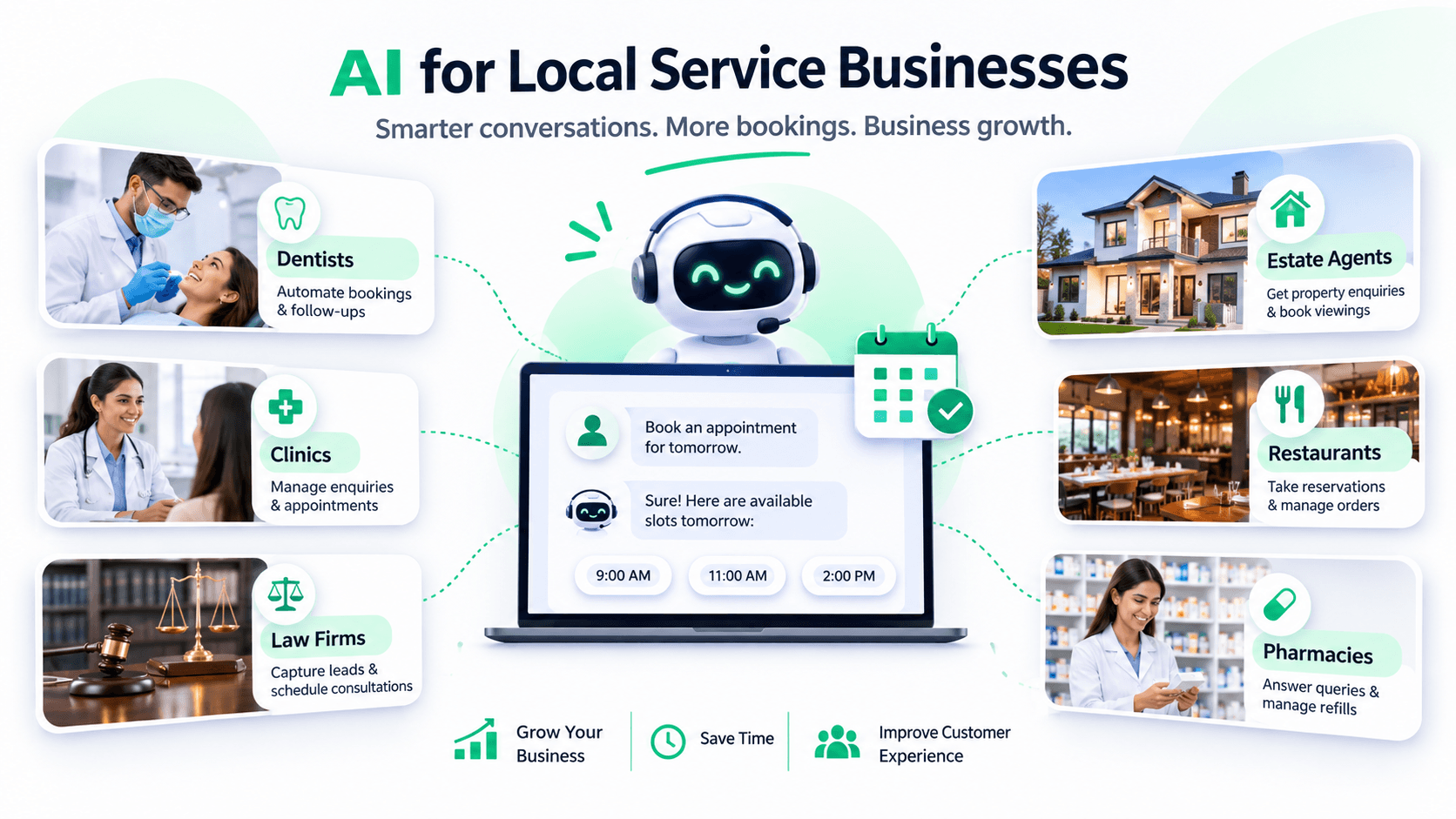
Key takeaways
Quick answer: Local service businesses lose far more to unanswered calls than most owners realise, because a missed call never shows up on a spreadsheet, it just quietly doesn't happen. An AI phone agent answers in one or two rings, around the clock, and books straight into the system you already use, which catches the routine calls that make up most of your phone traffic and leaves your team free for the ones that genuinely need them.
A diner trying to book a table. A patient needing a repeat prescription. A nervous first-time caller to a law firm. A buyer who just saw your listing and wants to view it today. They all do the same thing when the phone isn't picked up fast enough: they hang up, and they call the next name on the list.
We pulled the actual industry numbers for five types of local business, because the scale of this problem is bigger than most owners realise, and the fix is simpler than most expect.
What do missed calls cost, by industry?
| Business type | What one missed call is worth | Annual exposure |
|---|---|---|
| Restaurant | ~$145 per reservation | $105,000–$160,000 |
| Dental clinic | $5,495–$7,850 lifetime value | $100,000–$140,000 |
| Law firm | ~$3,200 per qualified intake | $12,800 at four a month |
| Estate agency | ~$12,000 per buyer-side lead | Varies by lead spend |
| Pharmacy | Lost pickups and patient churn | 12,000+ calls a month to absorb |
Restaurants: the missed call that walks straight to a competitor
Independent restaurants typically miss 20 to 30% of incoming calls during peak service, when the kitchen is slammed and nobody's free to pick up. One QSR industry study found an average answer rate of just 59.9%, a 40.1% miss rate, working out to roughly $73,000 in lost revenue per location every year. Across a 50-location group, that added up to $3.65 million annually.
For a typical independent, sit-down restaurant, a rough model looks like this: 5 to 7 missed calls a day during peak hours, around 40% of them reservation enquiries. That's 2 to 3 missed reservations a day, at an average value of around $145 each, which comes to $105,000 to $160,000 a year in lost revenue opportunity. Some analyses put the total cost of missed calls as high as $292,000 a year for a single restaurant, once takeaway orders are included.
The traditional fixes don't close the gap. A live answering service costs $500 to $1,500 a month and usually just takes a message rather than actually booking the table. A dedicated phone host costs $2,500 to $4,000 a month and is still only on duty during business hours.
An AI phone answering system changes the shape of the problem rather than just patching it. It answers every call in one or two rings, day or night, books straight into your existing reservation system (OpenTable, Resy, Toast, Square), and takes down takeaway orders instead of losing them to a ringing phone. Restaurants that switch report missed-call rates dropping close to zero and staff getting 45 to 60 minutes a day back that used to go on the phone.
Pharmacies: when the phone queue becomes the biggest barrier to care
A single large US retail pharmacy chain handles more than one million pharmacy-related calls a day across its stores, most of them routine: refill requests, prescription status, insurance questions, opening hours. One independent pharmacy system reported around 12,000 calls a month on its own, with pharmacists and technicians regularly pulled off the dispensing bench to answer questions that don't need a pharmacist at all.
AI voice agents built for pharmacy workflows now handle the bulk of this automatically: confirming refill requests, checking medication status against live inventory, answering opening-hours and insurance questions, and sending reminder calls when a prescription is ready. One analysis put the cost of an AI-driven medication reminder call at around $0.05 including the phone line itself, and found it lifted prescription pickup rates by 20 to 30%. The AI knows where its limits are too, handing off anything clinical, like dosage questions or drug interactions, straight to a pharmacist rather than guessing.
Worth noting: a recent pharmacist poll by Sermo found 63% aren't using any AI in their day-to-day work yet, which means most pharmacies haven't touched this problem at all. The ones that have are the ones quietly pulling ahead on patient retention.
Dental clinics: the missed call that costs more than one visit
Missed calls cost the average dental practice somewhere between $100,000 and $140,000 a year. The maths holds up at the level of a single call too: a single missed new-patient enquiry has been valued at $5,495 to $7,850 in lifetime value once you factor in the average 7 to 10 years a patient stays with a practice.
An AI phone system for dental clinics answers every call, books or reschedules straight into the practice's calendar, and handles basic questions about procedures and pricing, all without needing a dedicated front-desk hire.
Law firms: the after-hours call that goes to the next firm instead
Roughly a third of calls to law offices arrive outside normal weekday hours, exactly when there's nobody there to answer. One industry estimate puts the value of a single missed qualified intake call at around $3,200, meaning a firm missing just four a month is leaving $12,800 on the table. An AI receptionist built for legal intake answers after hours, screens the caller's situation, and books the consultation, without ever straying into giving legal advice it isn't qualified to give.
Estate agents: the lead that's gone in under a minute
Of every business on this list, the real estate numbers are the sharpest. A missed buyer-side lead has been valued at around $12,000, roughly the size of an average buyer-side commission, which is why agents who pay for leads from portals like Zillow or Rightmove take it so personally when one goes unanswered. An AI answering service qualifies the caller, captures their requirements, and gets a viewing on the calendar before they've had the chance to call the next agent on the list.
What AI phone answering actually can't do
To be straight about it: none of this works for every call. A genuinely distressed caller, a complex legal question, a clinical judgement call, these still need a human, and the cost of getting one of those wrong is far higher than any missed booking. The businesses getting the most value from this aren't replacing their team with AI, they're using it to catch the routine calls that make up most of their phone traffic, so the people on their team are only interrupted for the calls that actually need them.
The real question to ask
It isn't "should I use AI." It's "how many calls am I missing right now, and what's each one actually worth to me." For most of the businesses above, that number is bigger than it feels, because missed calls don't show up anywhere on a spreadsheet, they just quietly don't happen.
If you want to see how the sums work before you commit to anything, read our breakdown of what missed calls cost and how AI phone agents fix it, or compare the running costs in AI voice agent vs call centre vs virtual assistant.
If you want to find out what that number looks like for your business, we're happy to work through it with you on a free call, no pressure, just the maths. Book your free call →
About the author
Khushi Sharma works at Axonari on AI automation for local service businesses, including phone answering and booking systems for clinics, restaurants, law firms and estate agencies.