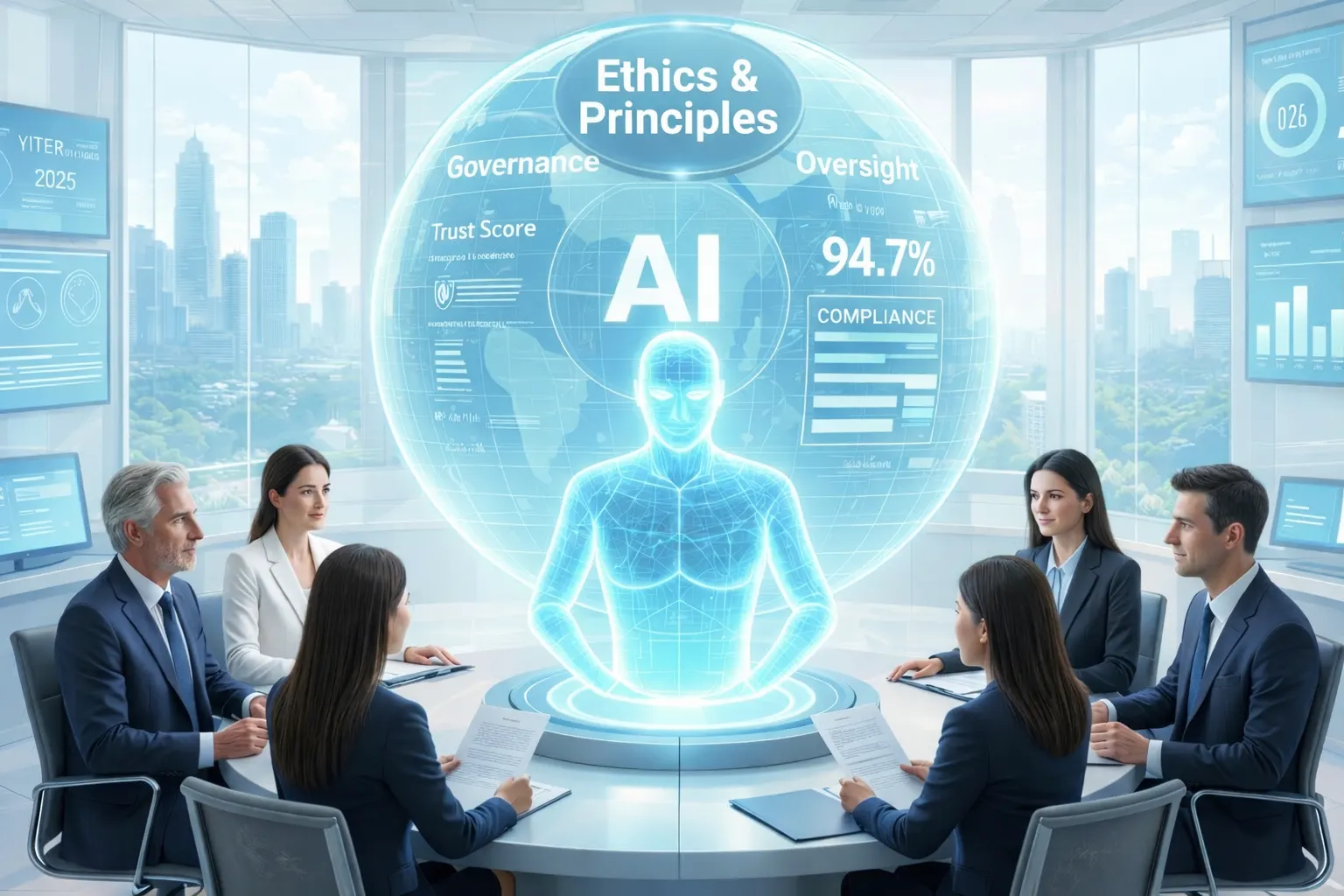
Most AI failures in production don't come from bad models. They come from missing governance.
A model can be accurate, well-trained, and thoroughly tested, and still cause serious damage once it's live. Governance is the difference between a high-performing asset and a quiet liability.
Quiet Failure: The Drift Trajectory
"AI systems fail quietly. Gradually. Then all at once. By the time someone notices, the damage has already been done."
AI is no longer a feature. It's Infrastructure.
Automation used to follow static rules. Now it makes autonomy-driven decisions across your entire stack.
The Components
Machine Learning Models
Workflow Orchestration
LLM-Powered Agents
Global Business APIs
The Impact
"These systems don't just analyze data. They act on it. They trigger workflows, update systems, and influence real outcomes."
This shift turns AI from simple software into core infrastructure that demands professional governance.
Video: MLOps in Production
What AI Automation Governance Actually Means
An AI governance framework is not just documentation. It's the system that ensures your AI behaves correctly in production. At a minimum, that includes:
Principles of AI Governance
Where most companies get it wrong
This is the pattern we keep seeing.
Teams treat governance as something to add later. So they end up with:
"Everything works… until it doesn't."
And when it breaks, there's no way to trace why.
Secure Infrastructure
With Governance
The Risk Environment
Without Governance
How Leading Companies Approach AI Governance
• Focuses on operationalizing responsible AI through fairness checks, reliability systems, transparency tools, and accountability structures.
• These are not just principles, but are enforced through tooling across Azure Services.
• Approaches this through MLOps governance featuring automated testing pipelines, strict version control, and continuous monitoring.
• The idea is simple: models are continuously managed systems, not one-time deployments.
• Designed for enterprise risk environments with strong focus on bias detection, drift monitoring, explainability, and centralized audit logging.
• This is governance built for scale and compliance.
Industry Leader Case Study
The Tooling That Makes Governance Real
Governance isn't manual. It's enforced through systems that detect issues in milliseconds.
Automated ML Model Lifecycle
A Practical AI Governance Framework
Click each phase to explore the governance requirements:
How we approach this at Axonari
We design AI systems with governance built in from the start.
For example:
If an AI workflow triggers a multi-step process, each step is independently monitored and logged.
So if something fails, it's contained not amplified across the system.
That's the difference between automation and governed automation.
What's Changing Next: The Era of AI Agents
AI agents make governance even more complex. They interact with tools, execute multi-step workflows, and make independent decisions. Errors spread faster.
These systems can:
Which introduces new risks:
Future-ready governance will require:
Ready to Build Safe, Controllable AI?
We build AI systems that are observable, controllable, and production-ready.
Key Takeaway
AI is not risky because it's intelligent. It's risky because it's autonomous and often unmonitored.
Most companies don't fail at building models. They fail at controlling what those models do after deployment.
If AI is part of your infrastructure, governance is not optional.
Final Thought
If your AI system makes decisions, triggers workflows, or interacts with real systems, then you're not just building automation. You're building something that needs control, visibility, and accountability from day one.
Get that right, and AI becomes a multiplier. Get it wrong, and it becomes a liability.
Want to build AI systems that don't break in production?
If you're designing or scaling AI workflows and want governance built in from the start, we can help. We focus on building AI systems that are observable, controllable, and production-ready.
"AI is not risky because it's intelligent. It's risky because it's autonomous and unmonitored. Control is the true multiplier."