The brief
CloudFO's finance team was buried under disconnected tools, Shopify, Xero, QuickBooks, Amazon, and several banks, none of which spoke to one another. Reporting slowed, errors crept in, and leadership lacked the real-time view it needed. They needed AI automation that could pull every source into one place and answer questions on demand.
The challenge
CloudFO's finance team was running on five disconnected platforms. Shopify, Xero, QuickBooks, Amazon, and three bank feeds each produced their own exports. Month-end reporting meant a week of manual reconciliation, and even then the numbers were already stale. Leadership was making decisions on data that was 30 days old.
The real cost of disconnected finance data is not just slow reporting. It is the decisions that do not get made, the opportunities missed while the numbers are still being assembled, and the management time burned bridging gaps that should not exist. CloudFO's leadership team was always working a month behind. By the time the report landed, the conditions it described had already changed.
Five platforms is not unusual for a business at CloudFO's stage. Shopify handles trading revenue. Xero runs the books. QuickBooks carries older records. Amazon adds a separate channel. Three bank feeds complete the picture. Each is authoritative in its domain. The problem is that none of them share a schema, a refresh schedule, or a common definition of what constitutes a transaction. Reconciling them by hand is not a finance task, it is a data engineering problem that the finance team has to solve every month before they can do their actual job.
What we built
We built a centralised data integration layer that pulls every source into a single warehouse on a live schedule. On top of that, we deployed a natural-language AI assistant: the CFO can type 'what is our cash-flow forecast for next quarter' and receive a sourced, accurate answer in seconds, with the underlying data available to inspect. Real-time dashboards replaced the monthly report entirely.
The integration layer normalises every source into a consistent schema before anything reaches the warehouse. A Shopify sale, a Xero invoice, and a bank credit are all different shapes of the same underlying event: money moving. The pipeline resolves those differences automatically, so the warehouse always holds clean, comparable data without manual intervention. CloudFO's team stopped exporting files the day the system went live.
The natural-language assistant sits on top of the warehouse and translates questions into precise queries without the CFO needing to know that is what is happening. Every answer is traceable to the rows that produced it. The model does not estimate or summarise from memory; it queries live data and returns sourced results. Questions that previously required a finance analyst to build a spreadsheet are now answered in seconds.
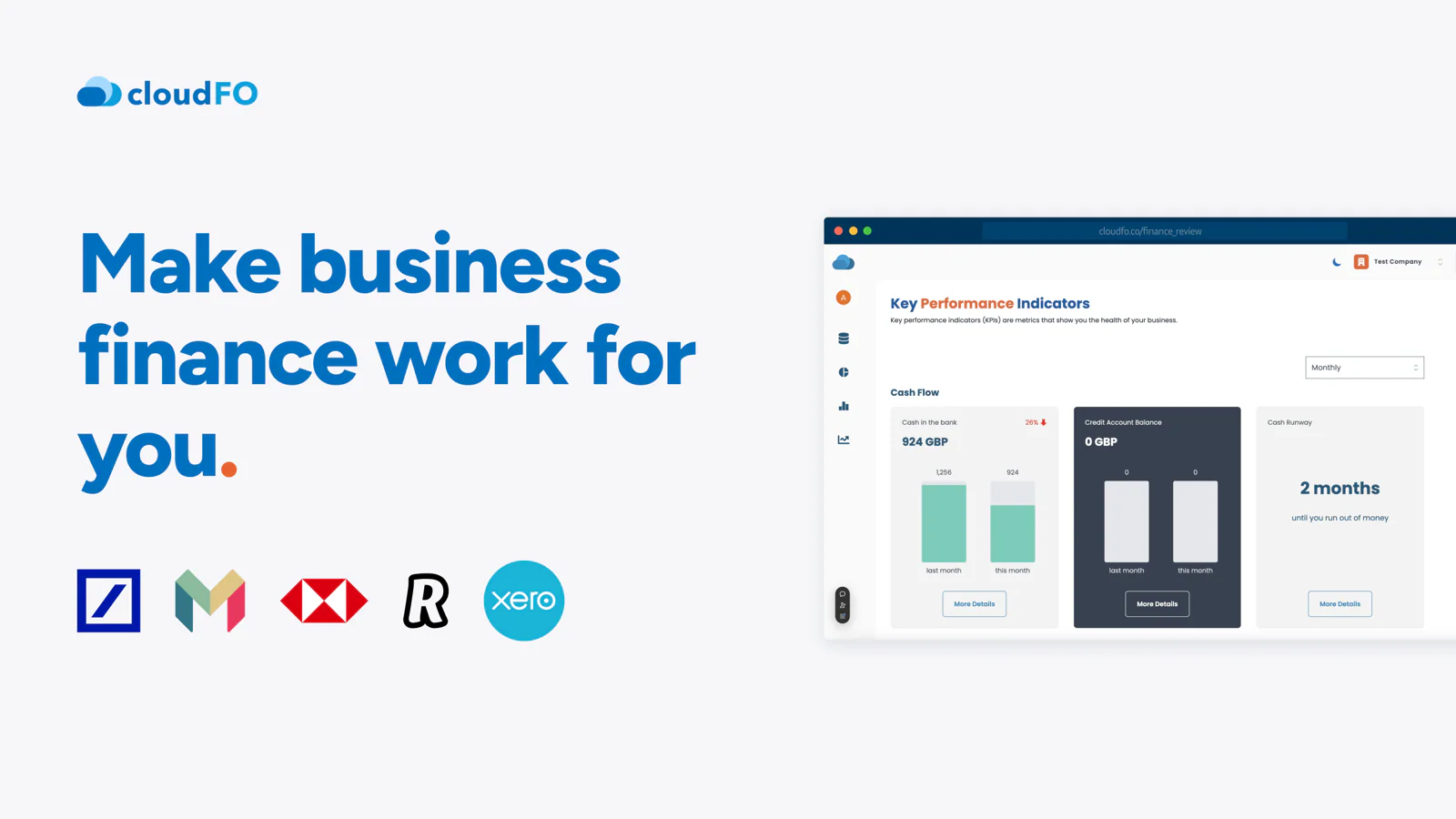
Real-time dashboards replaced the monthly report entirely. The finance team opens a single view each morning: cash position, channel revenue, reconciliation status, and forecast variance against plan. Nothing is aggregated manually. Nothing waits for an export cycle. The dashboard reflects the business as it stood at the most recent sync, which runs on a continuous schedule throughout the day.
The outcome
Reporting speed improved by 62%. Forecast accuracy rose 45% compared to the previous spreadsheet model. Errors in reconciliation fell 70%. The finance team recovered two full days a month previously lost to data chasing, and CloudFO's leadership went from monthly hindsight to daily foresight.
The broader change is strategic rather than operational. CloudFO's leadership now makes decisions from current data, not historical summaries. Pricing adjustments, channel investments, and cash-flow decisions all happen against a live picture of the business. The two days a month previously spent on reconciliation are now spent on analysis. That is the actual return on the build.